The Life You Cannot See From Where You Are

We hadn’t planned to meet.
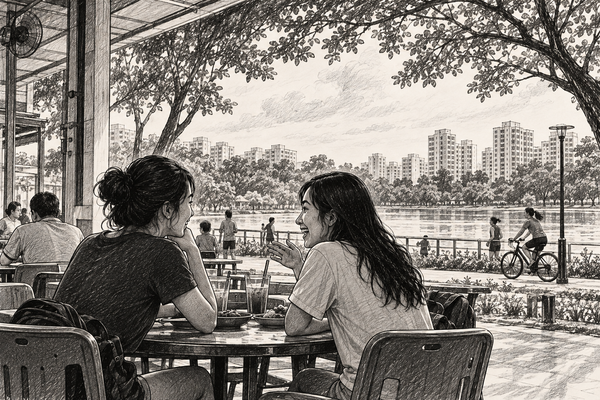
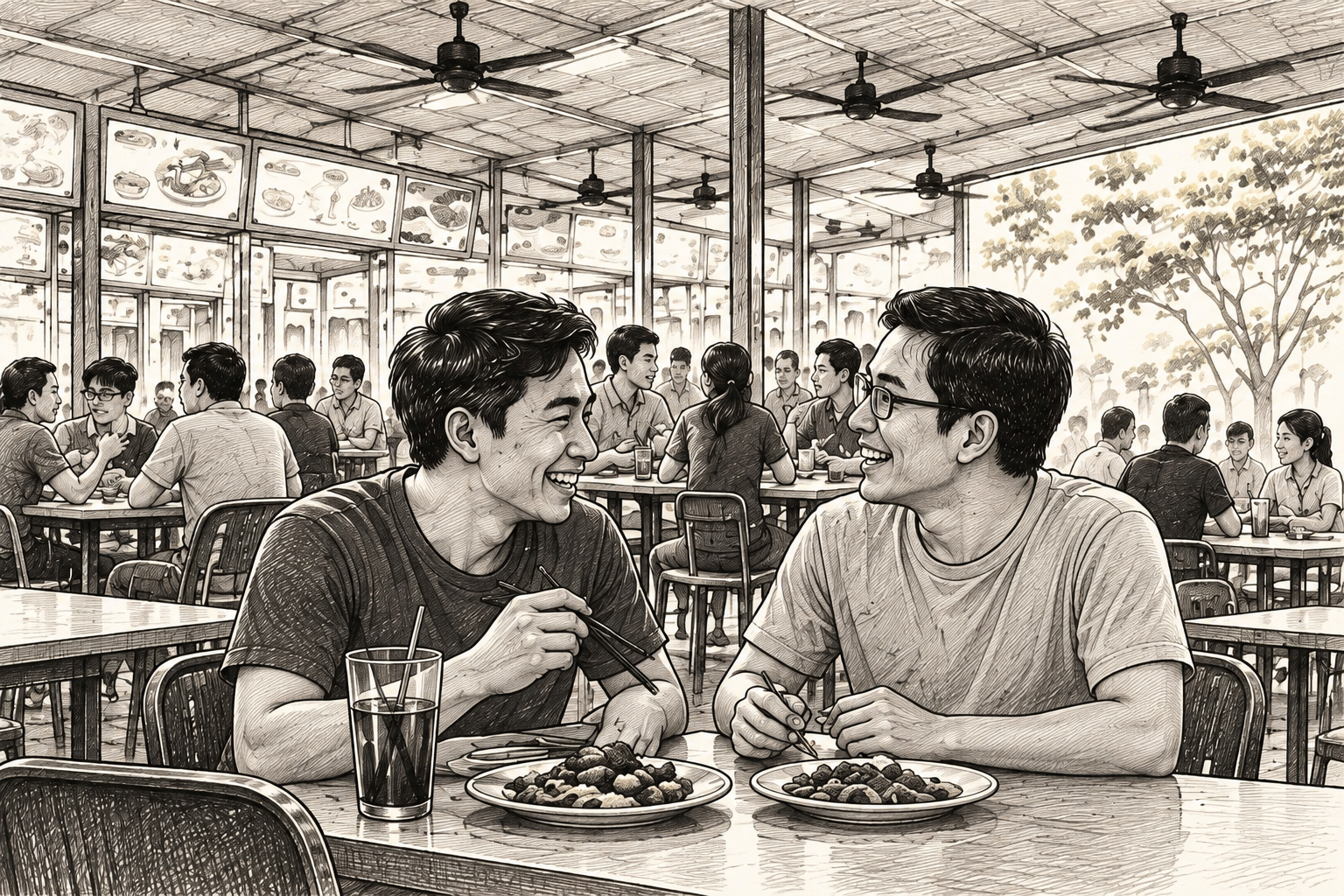
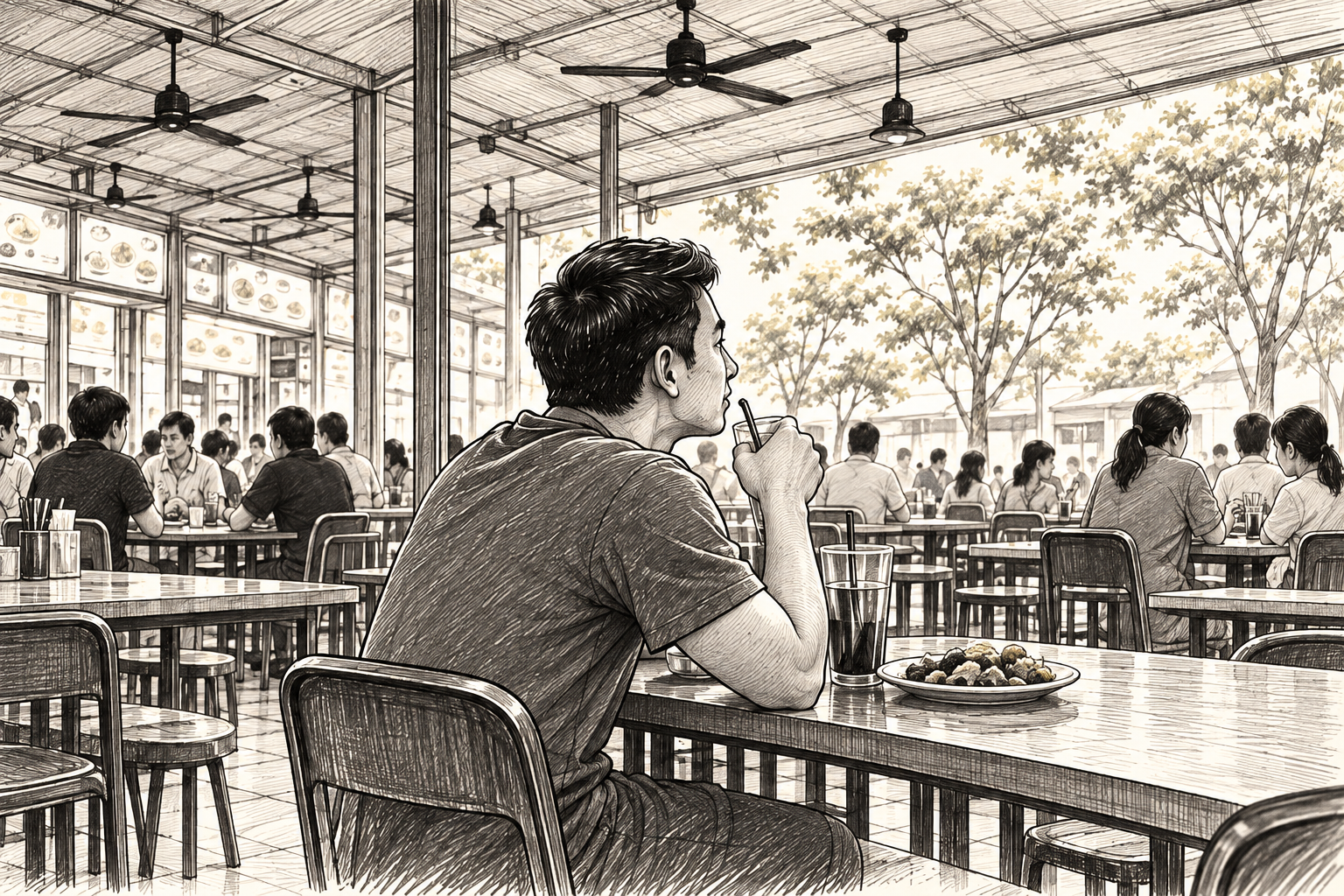
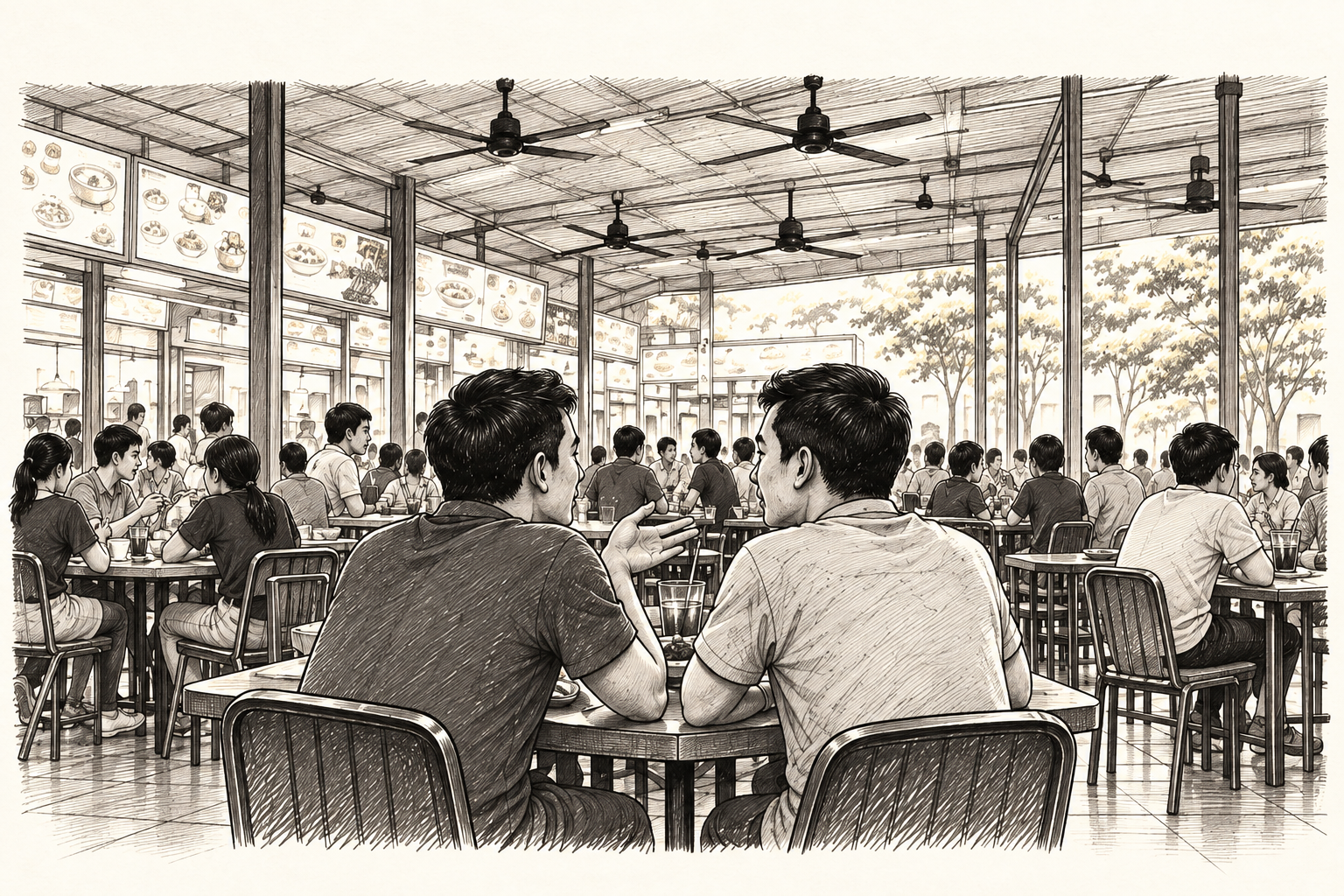
A few messages were exchanged, we happened to be nearby, and before long we were sitting across from each other at a hawker centre in Ang Mo Kio, sharing a plate of carrot cake.
Nothing particularly remarkable about that.
Two friends catching up over food. The familiar clatter of plates and trays around us. Conversations from neighbouring tables drifting in and out. People stopping for dinner before heading home.
We talked about work.
Family.
The things that had happened since we last properly caught up.
And somewhere in the conversation, I found myself thinking about a decision he had made some years earlier.
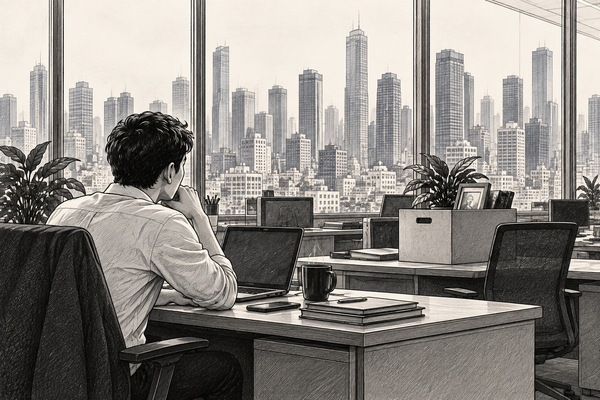
He left his corporate job to pursue a startup.
At the time, that was the choice.
Stay, or leave.
Stability, or uncertainty.
Continue along a career he understood, or find out what might happen if he stepped away from it.
But sitting across from him now, somewhere between pieces of carrot cake and a conversation that had moved well beyond work, it struck me that the choice had become much larger than the thing he originally chose.
Because the startup wasn’t the only thing that happened.
A different life did.
When the choice was much smaller
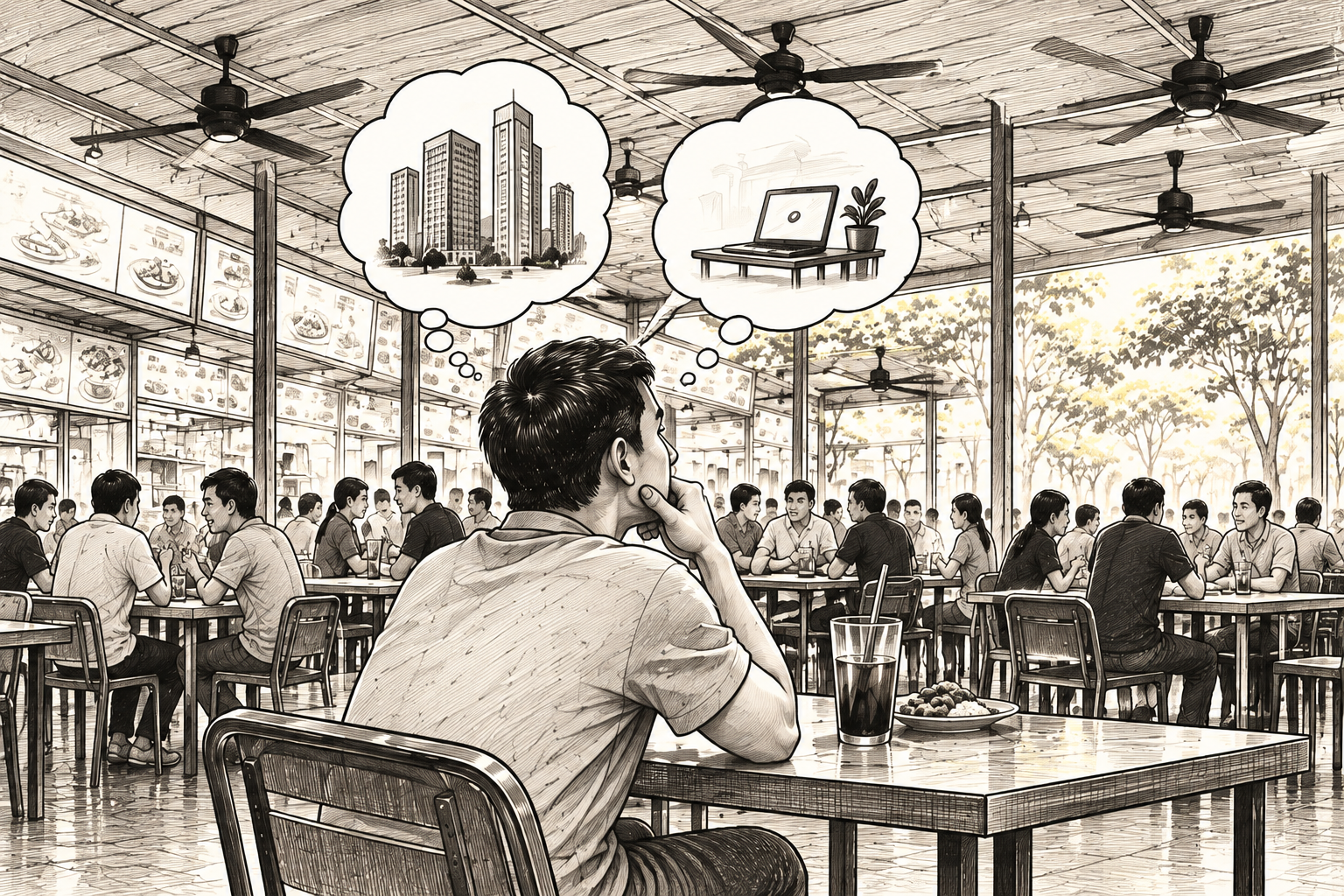
We tend to think of significant decisions in terms of the options immediately in front of us.
Take the job or don’t.
Stay or leave.
Start the business or remain employed.
Move or stay where we are.
At the time, these choices can feel enormous.
We weigh what we know.
The salary. The responsibilities. The risks. What we might gain. What we might lose.
When my friend left his corporate job, he was making a decision about work.
He could probably imagine some version of what startup life might look like.
More uncertainty.
Less structure.
The possibility of building something of his own.
Perhaps longer days. Different pressures. A less predictable income.
These were things he could think about.
But there was no way he could have seen everything that would follow.
Some of it didn’t exist yet.
The situations that would test him hadn’t happened. The problems he would learn to solve had not appeared. The experiences that would change how he thought about work and life were still somewhere ahead of him.
Even the person he would become through all of this didn’t exist yet.
And somewhere along the way, something else happened.
A third child came along.
That wasn’t part of the startup plan.
It wasn’t something sitting on one side of a pros-and-cons list when he was deciding whether to leave his corporate job.
It was simply part of the life that unfolded afterwards.
The original choice had been about work.
But life didn’t keep the consequences neatly inside that category.
We can only choose from where we are
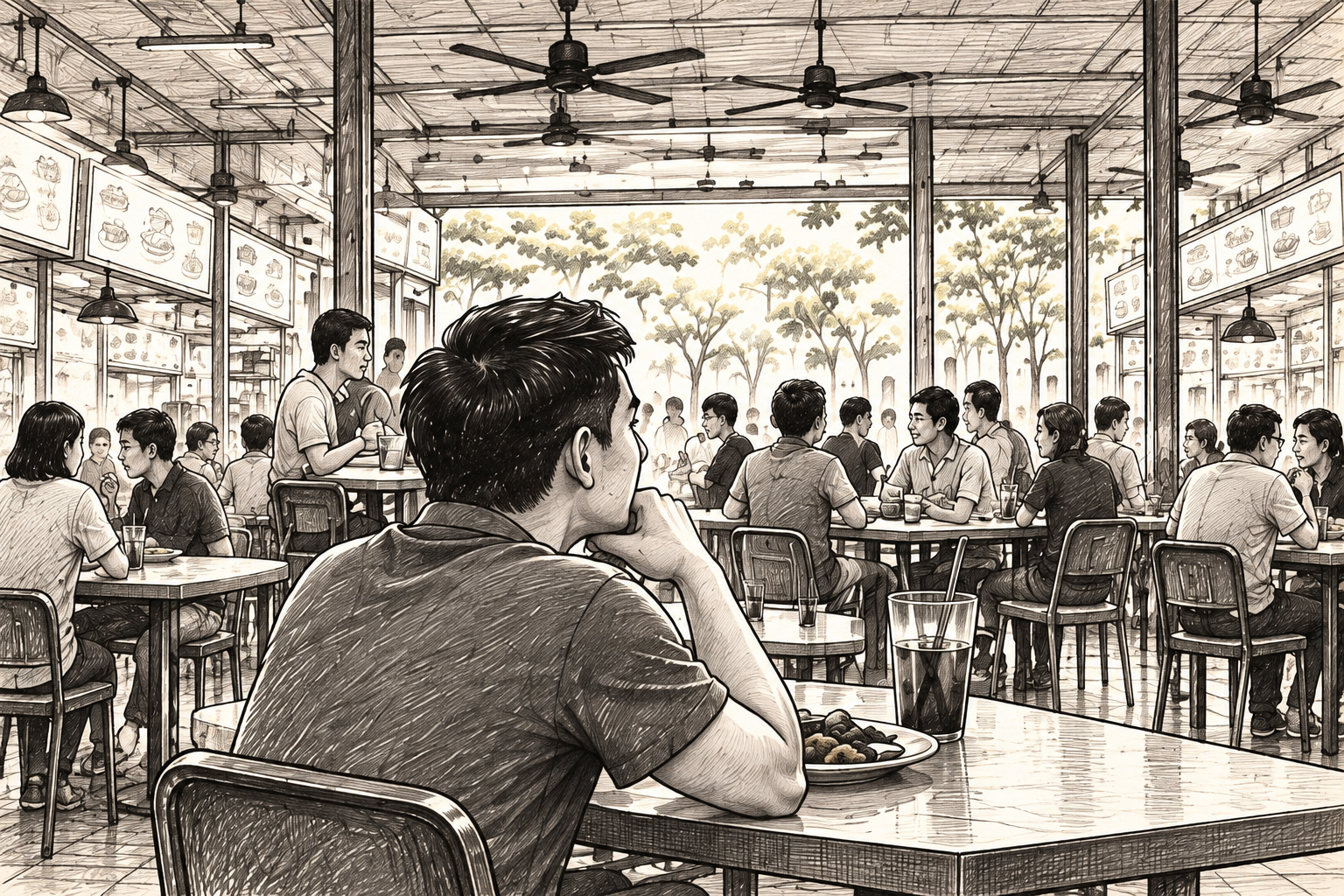
Perhaps this is one of the difficulties of making important choices.
We have to make them as the person we are today.
With what we know today.
From the life we are living today.
And from that position, some possibilities are simply impossible to see.
If you’re thinking about leaving a corporate career, you know a great deal about what you are leaving.
You know your salary.
Your colleagues.
Your responsibilities.
Your routines.
You know roughly when the bonus arrives.
You know what gets credited into CPF each month.
You know how the mortgage fits around the income.
You know the parts of the job you enjoy and the parts you have learned to tolerate.
Even if the future within that life isn’t certain, it is familiar enough to imagine.
Then you look at the alternative.
Perhaps a startup.
A different career.
A period away from work.
Something of your own.
And suddenly the picture becomes much less clear.
You can calculate. Plan. Ask questions. Talk to people who have done something similar.
But eventually you reach the edge of what can be known.
Because you are comparing a life you have already lived with a life that does not exist yet.
One side contains years of evidence.
The other contains mostly imagination.
No wonder staying can sometimes feel easier to justify.
What the spreadsheet cannot contain
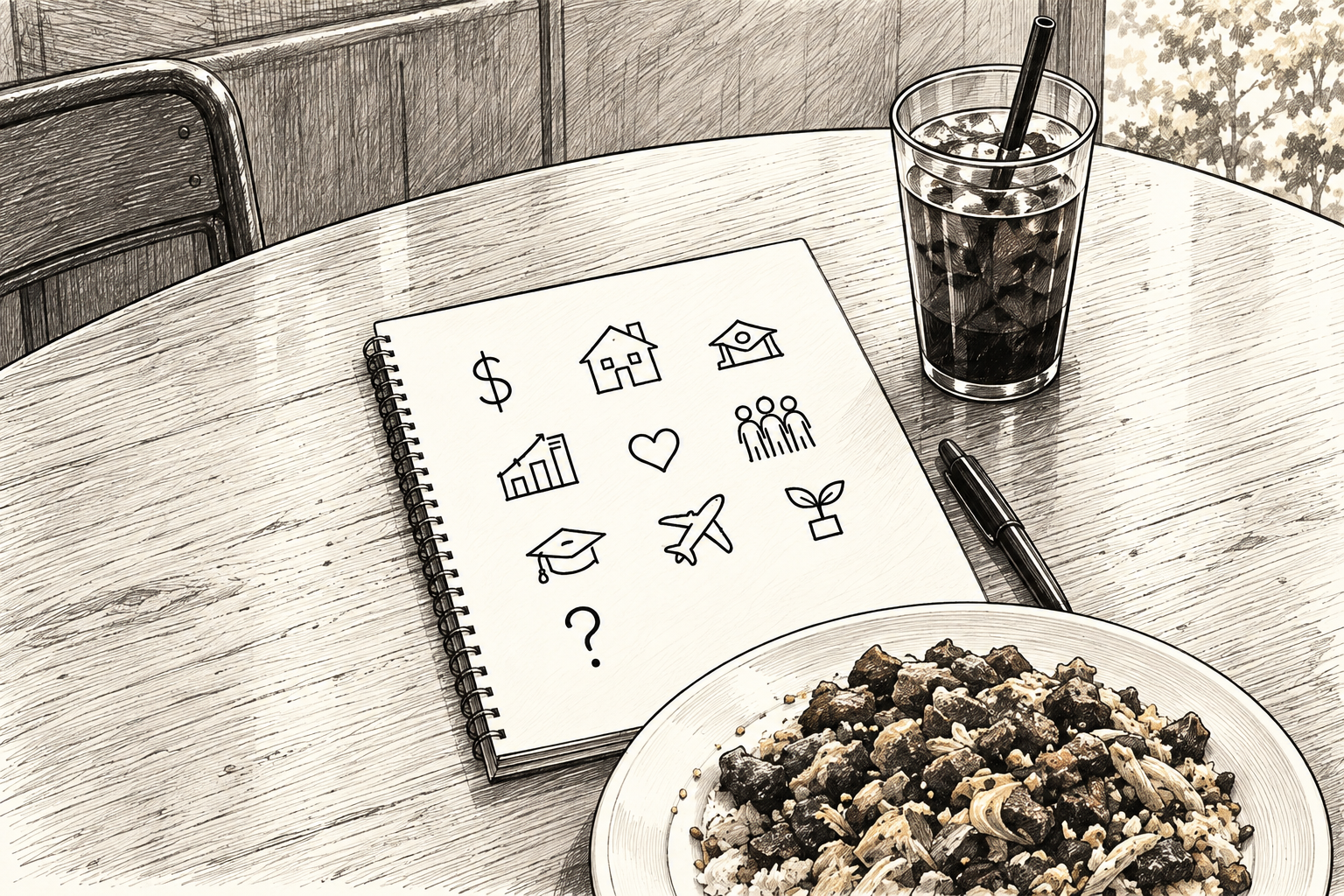
There are good reasons we try to make decisions rationally.
Especially when other people depend on us.
Financial consequences are real.
Responsibilities don’t disappear simply because another possibility feels interesting.
There are housing payments.
Parents.
Children.
Savings.
Insurance.
The ordinary costs of living.
These things matter.
But there are other consequences of a choice that are much harder to calculate.
Who might you meet?
What might you learn?
What will failure teach you?
What will become less important?
What will become more important?
What will you discover you are capable of?
How might your relationship with time change?
What parts of yourself might have room to develop simply because your days are organised differently?
There is no cell in a spreadsheet for the person you might become.
And there was certainly no row in my friend’s calculations labelled third child.
Yet there we were, years later, talking about a life that had expanded in directions neither of us could have predicted when he first made the decision.
That doesn’t mean leaving his job caused everything that followed.
Life is rarely that neat.
But perhaps the decision changed the conditions in which the rest of his life unfolded.
And that may be something we don’t think about enough when making choices.
Sometimes we aren’t simply choosing an outcome.
We are choosing the conditions from which other possibilities might emerge.
It wasn’t all possibility
There is a tempting way to tell stories like this.
Someone leaves corporate life.
Starts something.
Struggles for a while.
Grows.
Discovers what really matters.
Builds a better life.
It makes for a satisfying story.
But real lives rarely move so neatly.
My friend’s story hasn’t been entirely rosy.
There have been struggles.
Uncertainty.
Difficult periods.
Things that didn’t go according to plan.
Building something of your own may create certain freedoms, but it creates other responsibilities too.
Some pressures disappear.
Others take their place.
There may be days when the stability of a corporate salary looks particularly attractive.
There may be moments when you wonder whether you made the right decision.
Those parts matter too.
Because otherwise we turn someone’s life into a lesson it was never meant to be.
His story doesn’t prove that leaving a corporate job is the right thing to do.
It doesn’t prove that entrepreneurship leads to fulfilment.
And it certainly doesn’t mean that someone wondering about their career should resign tomorrow.
A different life is not necessarily a better life.
It is simply a life with different struggles.
Different joys.
Different uncertainties.
Different possibilities.
And perhaps a different version of ourselves living among them.
The person making the choice also changes
This may be the part we underestimate.
When we imagine different futures, we usually place our current self into each of them.
What would my life be like if I stayed?
What would my life be like if I left?
But the person who arrives five years later isn’t exactly the person asking the question today.
Experience changes us.
Responsibility changes us.
Failure can change us.
Success can too.
So can becoming a parent.
Building something.
Losing something.
Having to solve problems we never expected to encounter.
We develop capabilities because circumstances ask them of us.
We reconsider things because experience gives us information we didn’t have before.
Some ambitions become stronger.
Others quietly lose their hold on us.
Perhaps this is why certain choices are so difficult to evaluate in advance.
We aren’t only uncertain about what will happen.
We are uncertain about who we will become while it is happening.
My friend didn’t need to know, when he resigned, exactly who he would be years later.
He couldn’t.
He only had to make the choice that was in front of him.
Then life began asking different things of him.
And he responded as the person he was becoming.
Life makes more sense looking backwards
There is a well-known observation from Søren Kierkegaard that life must be lived forwards, even though we understand it backwards.
Sitting at the hawker centre, I found myself thinking about that.
Looking backwards, we can connect things.
A job was left.
A startup was pursued.
One experience led to another.
Priorities shifted.
A family grew.
A person changed.
From where we were sitting, there was a story.
But when he was standing at the beginning of it, there wasn’t.
There was only a decision.
That is the strange advantage of hindsight.
It makes a life look more coherent than it felt while we were living it.
Years later, we can point to moments and say:
That changed something.
That’s when this began.
If that hadn’t happened, perhaps this wouldn’t have happened either.
But the person standing inside that moment rarely has that perspective.
To them, it is an ordinary day.
There is a decision to make.
There are reasons to stay.
Reasons to leave.
Things to lose.
Things they hope might happen.
And an enormous amount they cannot see.
Sometimes we have to move before we can see
We often want clarity before making a decision.
Understandably.
Tell me where this goes.
Tell me whether it will work.
Tell me what my life will look like.
Tell me whether I will regret it.
Then I’ll decide.
But perhaps some kinds of clarity cannot arrive before the choice.
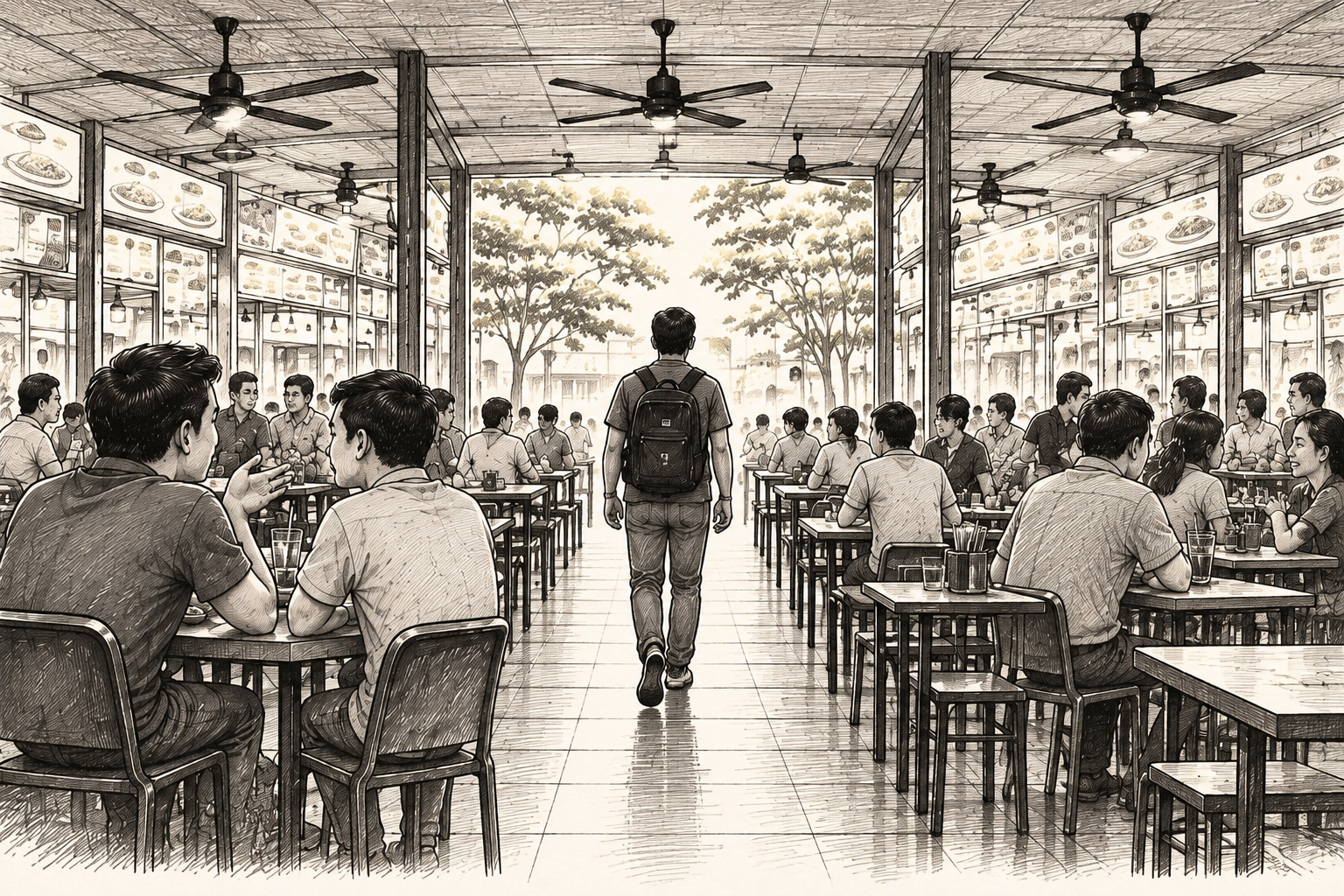
Sometimes we need to move before we can see what becomes visible from somewhere else.
A different environment introduces different people.
Different people introduce different ideas.
Different responsibilities reveal different capabilities.
One decision creates circumstances in which another decision becomes possible.
Then another.
The view changes as we move.
And eventually, we may find ourselves somewhere we could never have plotted from the beginning.
Not because we had an extraordinary plan.
But because the next possibility only became visible from the place the previous choice had taken us.
The choices that keep other choices invisible
There is another side to this.
Every choice makes some possibilities available.
But every choice also keeps other possibilities out of view.
Staying gives us access to the life that comes from staying.
Leaving gives us access to the life that comes from leaving.
Neither allows us to experience both.
Perhaps that is one reason important choices can feel so heavy.
We aren’t simply choosing what to do next.
In some small way, we are choosing which future we will get to discover.
The others remain largely unknowable.
We can imagine them.
Sometimes we may wonder about them.
What if I had taken that job?
What if I had stayed?
What if I had started something of my own?
What if I hadn’t?
But we never get the full answer.
We only get to live one version forward.
And perhaps that is also why comparing our choices with someone else’s life can be misleading.
We see what became possible for them.
We don’t see the alternative life they gave up.
We see where the choice eventually led.
We don’t always see the difficult Tuesdays along the way.
And we certainly don’t know whether making the same choice would have taken us somewhere similar.
Perhaps the task isn’t to somehow identify the path that contains the most possibility.
Maybe it is simply to recognise that whichever path we choose will reveal things we cannot see from where we are standing now.
A different possibility of life
As we talked, what stayed with me wasn’t whether my friend’s startup had succeeded by some conventional measure.
It was the life around it.
He had grown.
Not in some dramatic before-and-after way.
More in the way people often change when life has asked different things of them for long enough.
There were things he now understood because he had lived them.
Things he could do because circumstances had required him to learn.
Things he valued differently.
There had been struggles.
There was also joy.
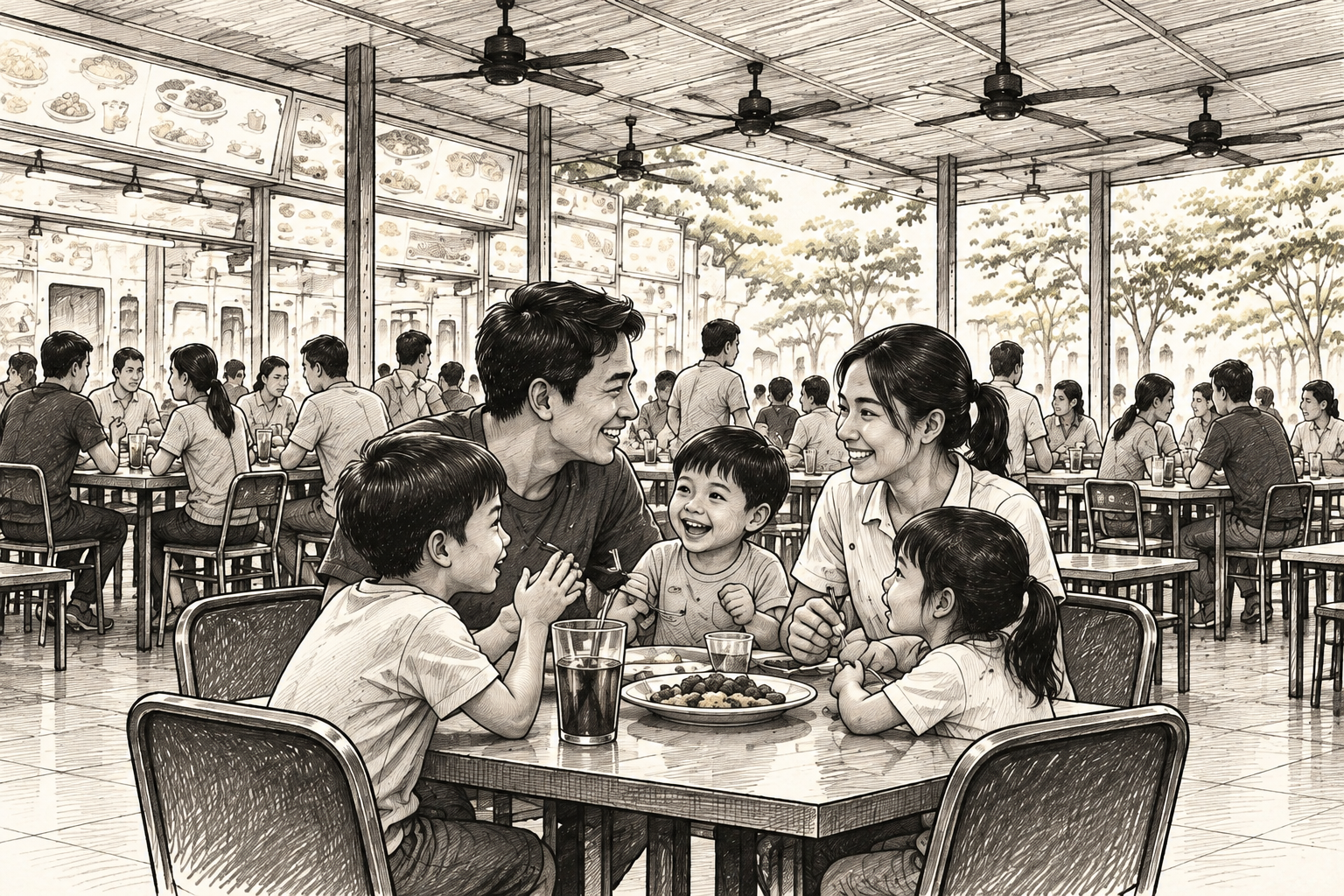
And there was now a third child who had become part of the family somewhere along the way.
That detail stayed with me.
Perhaps because it had almost nothing to do with the decision he originally made.
He left his job to pursue a startup.
He didn’t leave his job to create the exact life he has today.
He couldn’t have.
That life wasn’t available to choose yet.
It had to unfold.
And perhaps that is what I found myself noticing across the table.
Choices don’t remain neatly inside the categories in which we make them.
A career choice changes how we spend our days.
How we spend our days changes who we meet.
What we learn.
What we pay attention to.
What becomes possible.
And, slowly, who we become.
The life you cannot see from where you are
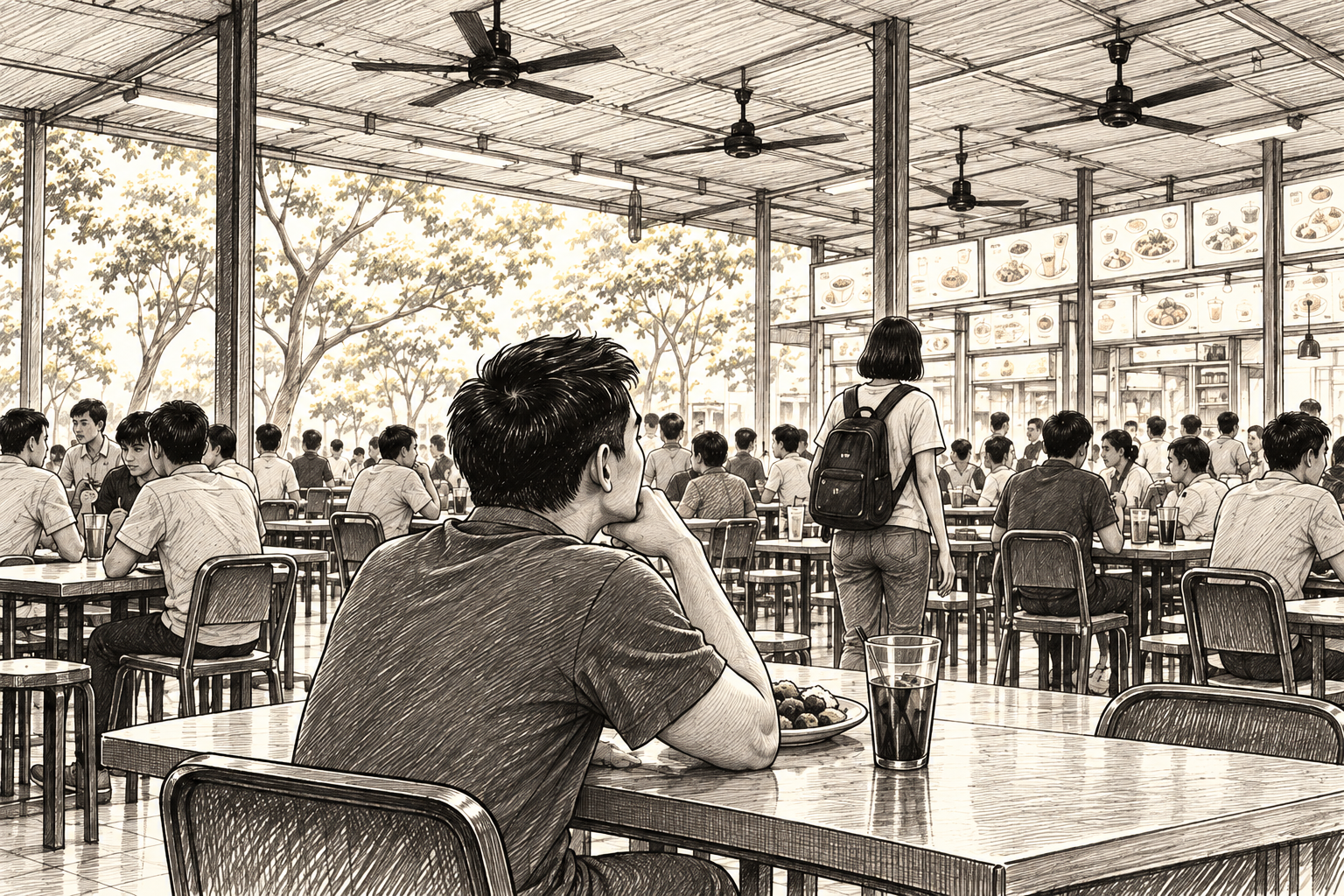
Eventually, there wasn’t much carrot cake left on the plate, and our conversation began to wind down.
Around us, the hawker centre continued as it had before we arrived.
People came for lunch.
Trays were cleared.
Someone found an empty table and sat down.
Nothing particularly remarkable had happened.
Two friends had met for a meal and talked about where life had taken them.
But I left thinking about how impossible it would have been, years earlier, for my friend to have seen this particular version of his life from where he was standing then.
Perhaps that is the uncomfortable thing about the choices that matter.
We want to see far enough ahead to know whether we are making the right one.
But perhaps we can’t.
We can think carefully.
We can understand what matters to us now.
We can consider the consequences we can see.
We can be responsible about the people who depend on us.
We can ask better questions.
And after all of that, there may still be something beyond our view.
A life that hasn’t happened yet.
A person we haven’t become yet.
Possibilities that don’t exist from where we are currently standing.
Some will bring joy.
Some will bring struggle.
Most will probably bring both.
Perhaps the point isn’t to be less careful with our choices.
It is to remember that we cannot judge an unlived life entirely by what we can see from here.
Sometimes the path doesn’t become clear before we move.
Sometimes moving is what gives us a different view.
So perhaps there are a few questions worth sitting with.
What possibilities might be invisible to you simply because of where you are standing today?
What are you assuming about your future because it is an extension of the life you already know?
Is there a choice you keep dismissing because you cannot see clearly enough what comes after it?
What might become possible if you didn’t need to know exactly where the choice would lead?
And perhaps the hardest one:
Are you waiting to see the whole path before taking a step that might be the only way to reveal it?
We cannot know the life on the other side of a choice before we live it.
Perhaps we aren’t supposed to.
Some possibilities can only become visible after we begin moving towards them.