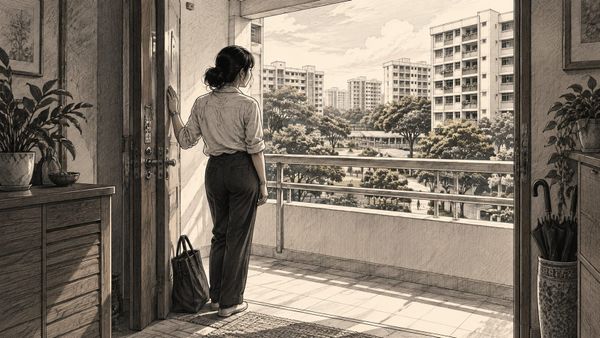
Why I Secretly Wished I Was the One Who Got Retrenched

There was a period when people around me were being retrenched.
The conversations changed.
People wondered who might be next. Every unexpected meeting carried a little more weight. News travelled quickly when someone was asked to leave.
The natural reaction was to hope your name wouldn’t be called.
I felt that too.
But there was another thought I didn’t say aloud.
A part of me wished it would be me.
It wasn’t a thought I was particularly proud of.
People were losing their jobs. Some had families to support, mortgages to pay, plans built around an income they suddenly no longer had.
Retrenchment wasn’t something to romanticise.
And yet, when I imagined being called into that meeting, I noticed something unexpected alongside the fear.
Relief.
Not relief at losing the job.
Relief that the decision would no longer be mine.
And perhaps something else.
The possibility of feeling light again.
I couldn’t have explained exactly what I meant by that at the time.
My life wasn’t unbearably heavy. There wasn’t one particular burden I desperately needed to put down.
It was more cumulative than that.
The responsibilities. The expectations. The next thing that needed to be done. The sense that there was already a path in front of me and that the sensible thing was simply to keep walking it.
I wondered what it might feel like, even briefly, for that path to disappear.
The thought I didn’t quite want to admit

At the time, there wasn’t an obvious reason to leave.
The job wasn’t terrible.
There hadn’t been some dramatic moment that made me think, That’s it. I’m done.
And perhaps that was part of the problem.
When something is clearly wrong, leaving can become easier to understand.
But what do you do when nothing is really wrong and something still doesn’t feel quite right?
You keep going.
There is always another reason to stay a little longer.
The salary. The familiarity. The people. The experience you’ve accumulated. The uncertainty of what comes next.
Perhaps another opportunity will appear.
Perhaps things will feel different in six months.
Perhaps you’re simply going through a phase.
All reasonable thoughts.
And so Monday arrives, and you go back to work.
But when people around me began being retrenched, another possibility appeared.
What if I didn’t have to decide?
What if one day someone simply sat across from me and said:
Your role is being made redundant.
There would be fear.
There would be practical questions.
There would probably be a period of not knowing what came next.
But there would also be something I hadn’t been able to give myself.
Permission to find out.
When leaving feels harder than staying

There is a clarity that comes when something becomes obviously intolerable.
But many of us don’t find ourselves there.
We find ourselves somewhere in between.
The job is good enough to stay.
But perhaps not meaningful enough to stop wondering.
The business is doing well enough to continue.
But perhaps we no longer feel the same excitement about making it bigger.
The career still offers opportunities.
But perhaps the life surrounding those opportunities has become less appealing.
There is no crisis.
Only a quiet uncertainty.
And uncertainty is surprisingly easy to live with.
We go to work. We answer emails. We attend meetings. We solve problems.
Another month passes.
Then another year.
Nothing forces the question, so the question can remain unanswered.
Sometimes for a very long time.
Perhaps what we want is permission
Maybe this is why the idea of retrenchment can contain a strange kind of relief.
The decision would no longer be ours.
We wouldn’t have resigned.
We wouldn’t have walked away from stability.
The company would have made the decision.
And with that decision would come something we may have struggled to give ourselves.
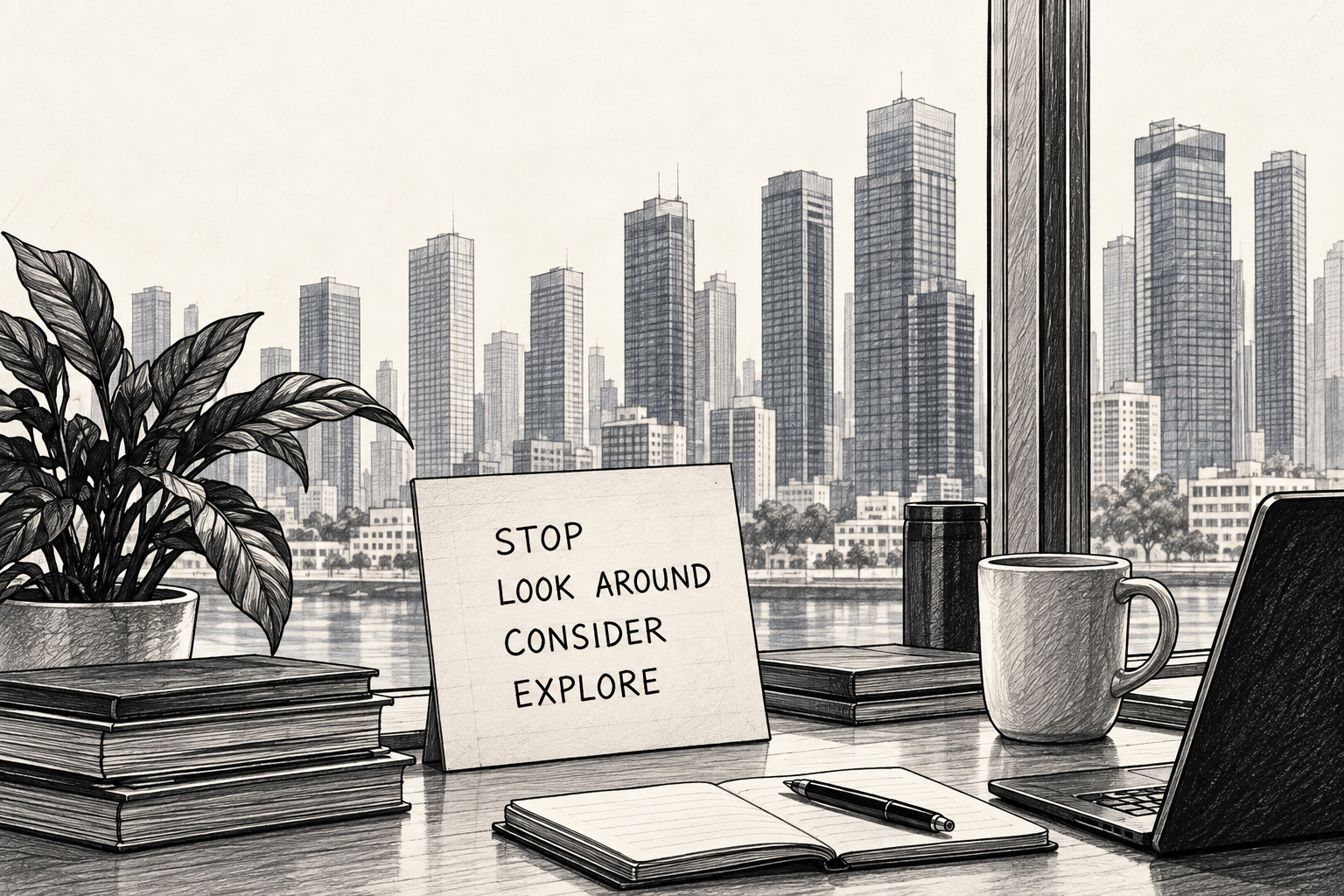
Permission.
Permission to stop.
Permission to look around.
Permission to ask what else we might do.
Perhaps even permission to explain the change without having to justify it.
Someone asks why you left your job.
I was retrenched.
There isn’t much more to explain.
But say instead:
I left because I wasn’t sure I wanted to do it anymore.
Now there are questions.
What are you going to do?
Why leave before finding something else?
What about the salary?
Are you sure?
And perhaps the most difficult question is the one nobody else needs to ask.
What if I’m making a mistake?
Retrenchment removes that particular decision.
The door has closed.
We simply have to decide what to do with the space on the other side.
Perhaps that was part of the relief I imagined.
Not having nothing to carry.
Just not having to carry the same things automatically.
For a while, there would be no next role to grow into. No trajectory to maintain. No need to keep proving that the choices which had brought me here were still the choices I wanted to make.
There would be uncertainty, certainly.
But somewhere inside that uncertainty, I imagined there might also be lightness.
The relief of having no choice

We usually think of freedom as having choices.
More options. More possibilities. More doors we could walk through.
But choice has another side.
When several doors remain open, we are responsible for deciding which one to close.
And closing a door ourselves can be difficult.
Especially when there is nothing obviously wrong behind it.
A stable career.
A respectable salary.
A role other people might be happy to have.
Walking away means accepting responsibility for whatever happens next.
But when circumstances close the door for us, the question changes.
It is no longer:
Should I leave?
It becomes:
What do I do now?
That may be frightening.
But perhaps there is also something freeing about a question that looks forward rather than back.
For the first time in years, the next step may not be implied by the one before it.
There is suddenly space where a path used to be.
Perhaps feeling light isn’t the same as having fewer responsibilities.
Sometimes it may simply be the feeling that our future has opened up again.
That the next few years are not already spoken for.
That we could choose differently without first having to dismantle everything ourselves.
Maybe that was what I was imagining when I secretly wished my name would be called.
Not unemployment.
Not escape.
Possibility without the weight of having to create the rupture myself.
What would you have done next?
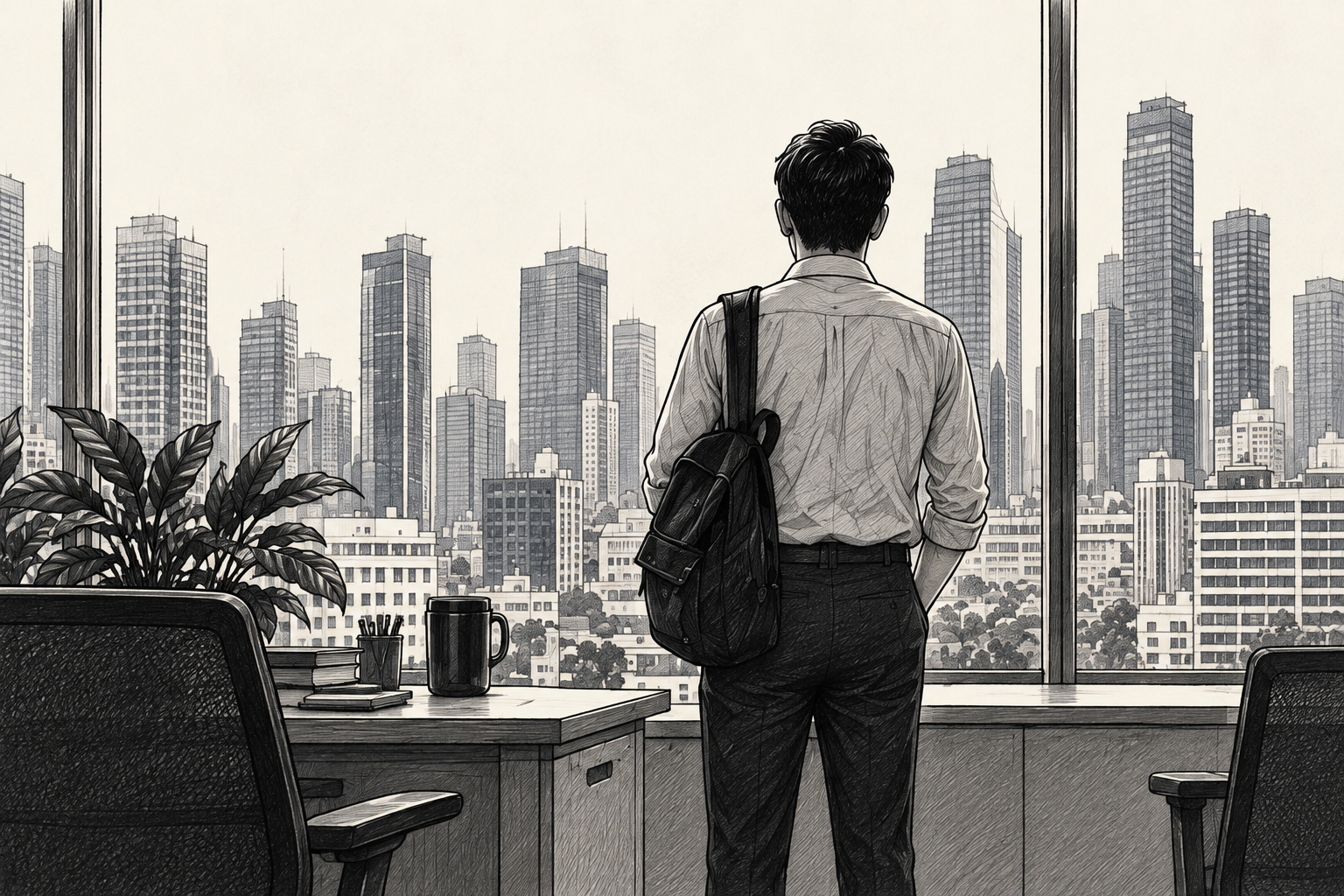
Imagine your name really had been called.
The meeting happens.
The words are said.
You go home knowing that tomorrow will look different.
After the shock, the worry and the practical calculations, what would you do?
Would you immediately begin looking for the closest possible version of the job you just lost?
Same industry.
Similar role.
Similar salary.
Similar trajectory.
Perhaps you would.
Maybe the work still fits. Maybe what you wanted was simply a different environment or a better opportunity.
But perhaps your mind goes somewhere else.
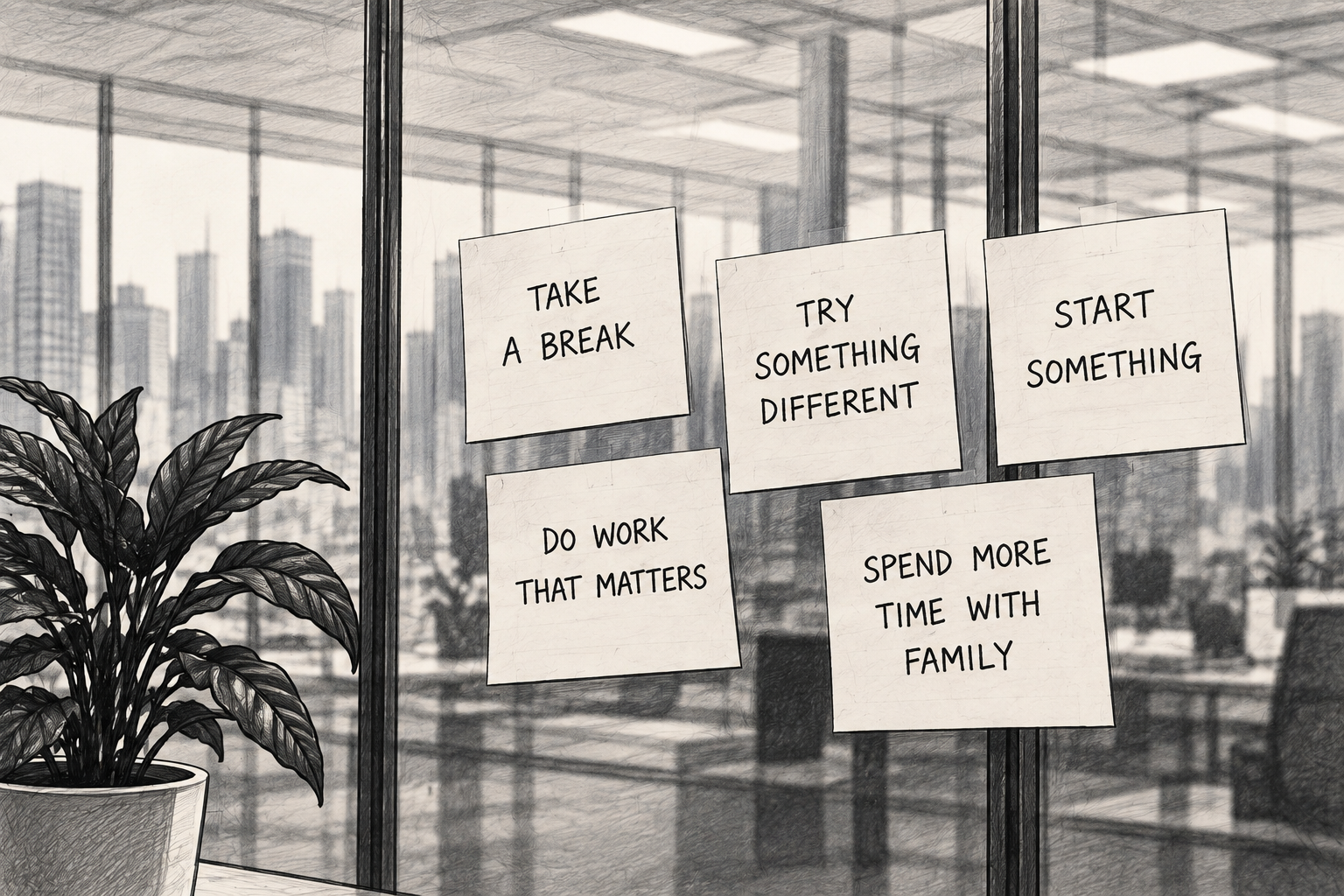
Maybe you imagine taking some time.
Trying something different.
Starting something.
Returning to something you once cared about.
Doing work that pays less but gives something else back.
Or perhaps you don’t know what you would do.
You simply know that you wouldn’t rush to recreate exactly what you had.
That may tell you something too.
Because perhaps the revealing part isn’t that you imagined losing your job.
It is what you imagined becoming possible once the job was gone.
The things we wait for permission to do
Retrenchment is only one version of this.
Sometimes we wait for circumstances to make choices easier to explain.
A restructuring gives us permission to reconsider our career.
A business setback gives us permission to question whether growth is still the goal.
An opportunity disappearing gives us permission to acknowledge that perhaps we weren’t as disappointed as we expected to be.
Sometimes we even wait until we are exhausted before allowing ourselves to rest.
As though a choice becomes legitimate only once something outside us makes continuing difficult enough.
Perhaps we do this because external events give us a reason.
I had no choice.
There can be comfort in those words.
But perhaps they are worth noticing when we find ourselves hoping to be able to say them.
When nothing is forcing the decision

The harder situation may be the one where nothing happens.
You aren’t retrenched.
The company continues.
Your business remains viable.
The promotion arrives.
Your salary is credited at the end of the month.
Monday keeps becoming Tuesday.
And the decision remains yours.
Perhaps we were quietly hoping life would interrupt the trajectory for us.
Instead, life keeps allowing us to continue.
There is no event dramatic enough to make us reconsider.
No decision handed down from somewhere else.
Only the awareness that, if nothing changes, we may still be here some years from now.
And perhaps that is perfectly fine.
But perhaps it isn’t.
The difficulty is that we have to decide.
Not every thought needs to become an action

Noticing that part of you wanted to be retrenched doesn’t mean you should resign tomorrow.
A thought is not an instruction.
There are real reasons to stay.
Financial commitments matter.
Timing matters.
Family matters.
Security matters.
Sometimes we knowingly remain somewhere because it supports something else that matters more.
That can be a thoughtful choice.
And perhaps after looking more carefully, we realise that we don’t actually want to leave at all.
Maybe we wanted a break.
A different role.
Less responsibility.
More autonomy.
Or simply the reassurance that another life was still possible.
We don’t have to turn every moment of discomfort into a dramatic change.
But neither do we have to dismiss the thought simply because it seems irrational.
Sometimes the thoughts we are most reluctant to admit are pointing towards questions we haven’t yet allowed ourselves to ask.
Perhaps it wasn’t retrenchment you wanted
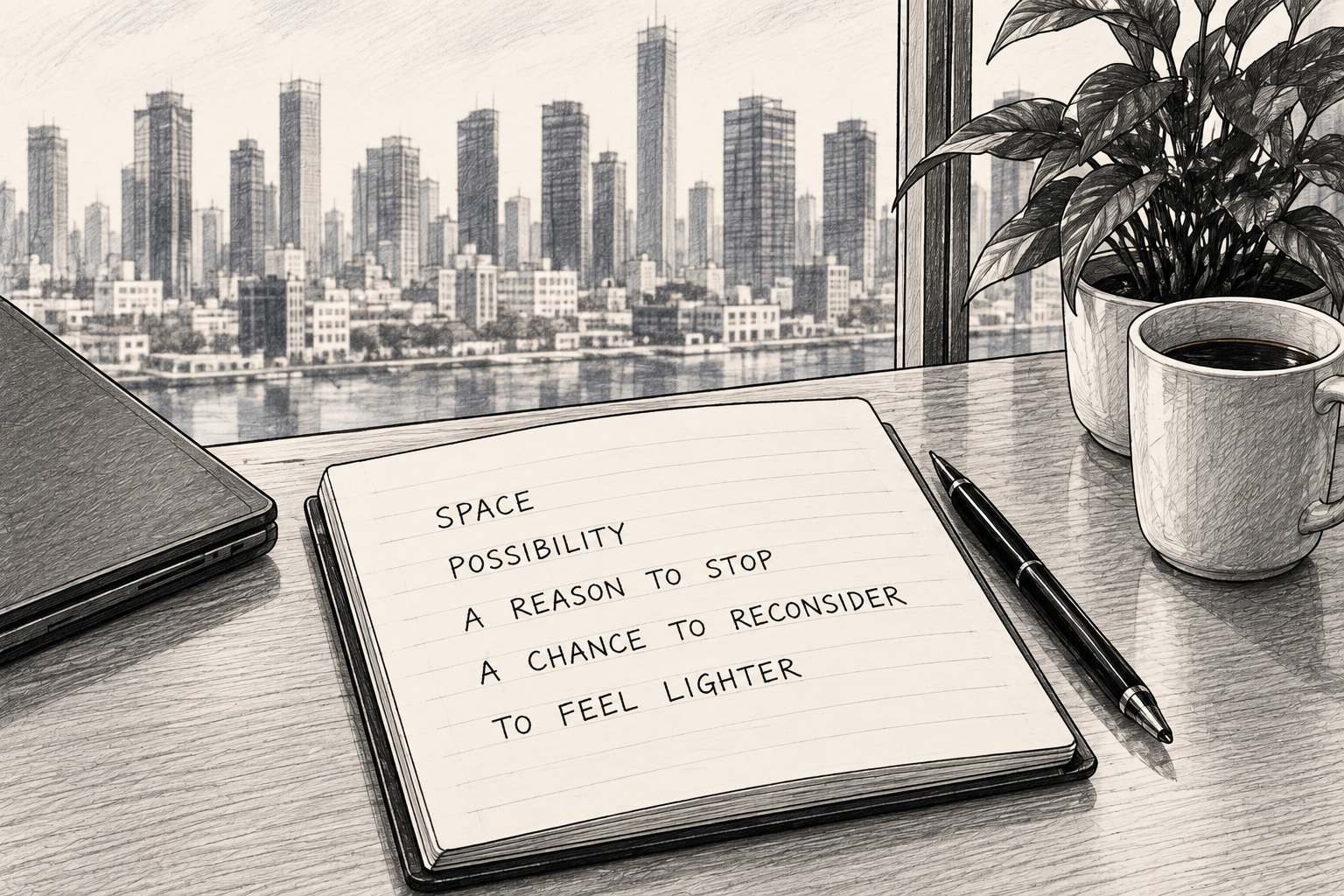
Maybe you didn’t want to lose your job.
Maybe you wanted what you imagined might come afterwards.
Space.
Possibility.
A reason to stop.
A chance to reconsider.
Perhaps, more than anything, the chance to feel a little lighter.
Not because responsibility itself had become something to escape.
But because you had been carrying the same direction for so long that you had forgotten what it felt like not to know exactly where you were supposed to go next.
The freedom to say that this chapter had ended without having to be the person who ended it.
Perhaps that is why the thought carried both fear and relief.
One part of you understood what you might lose.
Another part was wondering what losing it might make possible.
Neither feeling needs to win.
Perhaps they simply deserve to be seen together.
Because sometimes secretly wishing for the decision to be made for us doesn’t mean we want everything that comes with it.
It may simply reveal how difficult it has become to make the decision ourselves.
So perhaps the question isn’t:
Would you want to be retrenched?
It is:
If something outside your control made the decision for you tomorrow, what would you finally give yourself permission to reconsider?
And if something comes to mind:
What is stopping you from considering it now?